


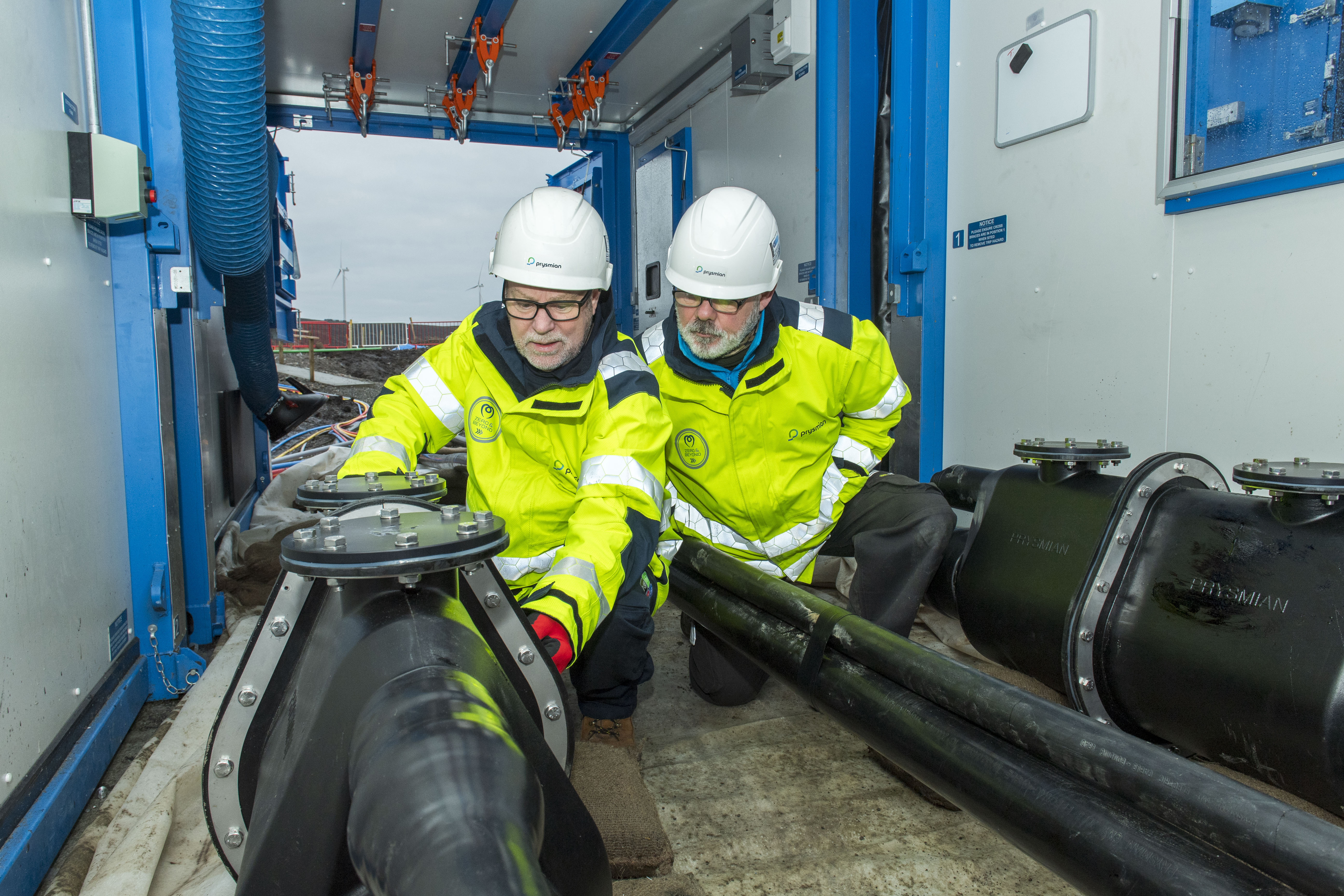
Understanding high voltage cable
High voltage cables, often referred to as HV cables, form the backbone of modern power transmission and distribution networks.
With growing demands for more reliable and efficient networks, the role of HV cable systems has never been more critical.
Why do we need high voltage cables?
HV cables ensure that electricity is delivered safely and efficiently across long distances and in challenging environments. HV cables reduces the heat losses associated with the resistance of the conductor. In other words, the losses are reduced when transmitting or distributing at high voltage and low current.
What is classed as high voltage in the UK?
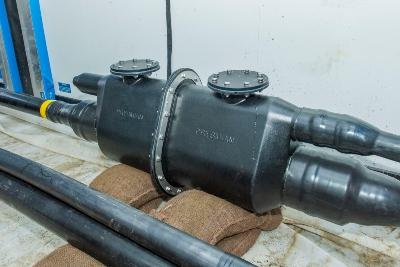
In the UK, voltages are typically divided into four categories: low voltage (LV), medium voltage (MV), high voltage (HV) and extra high voltage (EHV). The following official definitions and legal context apply to the term “high voltage”:
Electricity Safety, Quality and Continuity Regulations 2002
Although these regulations do not define “high voltage”, they do specify that ‘high voltage means any voltage exceeding low voltage’ setting the boundary between low and higher voltages at 1 000 V AC (230 V nominal LV).
IEC and IET international standards
International Electrotechnical Commission (IEC) and the Institute of Electrical and Electronics Engineers (IET) generally define “high voltage” as any voltage above 1,000 volts (1 kV) AC or 1,500 volts (1.5 kV) DC.
IEC 60038 and the UK power network classification is as follows:
Low Voltage (LV): up to 1000 V
Medium Voltage (MV): 1000 V – 45 000 V
High Voltage (HV): 45 000 V – 230 000 V
Extra-High Voltage (EHV): above 230 000 V
BS 7671 (IET Wiring Regulations) – referenced under Electricity at Work Regulations 1989
Complying with BS 7671 helps professional electricians meet the legal duties under the Electricity at Work Regulations 1989 (EaWR). The definition under EaWR states:
‘High voltage is a voltage in excess of 1000 V AC or 1500 V DC (direct current). Low voltage is a voltage up to and including 1000 V AC or 1500 V DC.’
In short, the definition of “high voltage” aligns with IEC/IET international standards and UK power network classifications.
Prysmian design and manufacture cables that range from standard low voltage (up to 1 kV), through medium voltage (11 kV, 22 kV and 33 kV) to high voltage (66 kV, 132 kV) and extra high voltage cable (275 kV, 400 kV and above). All our HV and EHV cable systems are designed to deliver the client rating, which means all 66 kV and 132 kV distribution systems – including all 275 kV and 400 kV transmission systems – are bespoke to each project.
High voltage cable applications

Common applications for high voltage cables include:
Power transmission and distribution – HV and EHV cables transmit electrical energy from generating sources through substations and in to distribution networks for cities and towns.
Industrial use – HV cables supply high-load power to heavy manufacturing sites.
Data centres – HV cables connect data centres to meet high power demands.
Renewable energy – power generated by wind farms, solar farms and hydro schemes feeds the electric grid using HV cables.
Infrastructure projects – In cases where the installation of overhead lines is impractical due to typography of the region, or there is a restriction because of planning constraints, HV cables can transmit power over long distances in underground or subsea applications.
Prysmian: Supporting projects across the UK

Prysmian works in partnership with network owners and their teams to provide a bespoke or supply only service, ensuring all requirements are met.
Prysmian led the design, manufacture, installation and commissioning of a 132 kV underground cable system, which connected the 59 MW solar farm in Yelvertoft, Northamptonshire, to the UK distribution network. Working with both the client and subcontractor eSmart, the Prysmian team designed the cable and trench infrastructure in a way that minimised mechanical stress.
Prysmian also supplied its CLICK-FIT dry HV terminations and cable accessories and managed all civil-works logistics. The team pulled the cable along the route, tested it on-site using mobile high-voltage trailers and handed over a network-ready system in August 2024 without requiring any joints.
In Scotland, Prysmian worked in collaboration with SSEN Transmission and main contractor Morgan Sindall Infrastructure to supply, joint and terminate a bespoke 132 kV underground cable system for the remote Shetland link. The cable system connected the new Grid Supply Point at Gremista to the Kergord Substation. As the route travels through peat-rich, shifting ground, the cable route was designed with snaking to allow for ground movement.
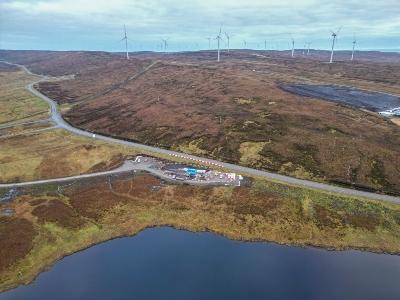
(Image: Jointing booth, Gremista, Scotland.)
Rigorous factory tests were client witnessed and accepted before 99 drums of HV cable (each weighing 15 tonnes) were delivered to Shetland. Prysmian then provided specialist high-voltage teams to conduct all the jointing and terminating work with the Prysmian CLICK‐FIT terminations. On-site high-voltage testing completed the commissioning phase.
These projects demonstrate how Prysmian can deliver complex, high-performance cable systems from the design and material specification through to installation and commissioning, especially in the most challenging environments.
High voltage cable systems are vital to modern power infrastructure, ensuring safe, reliable and efficient energy transmission and distribution. Prysmian is beyond cable supply. We can deliver a turnkey solution that includes cable system design, installation, commissioning and long-term performance monitoring solutions.
Working in collaboration with our clients, we support the development of the energy network across the UK and beyond. Learn more about Prysmian Power Grids.