


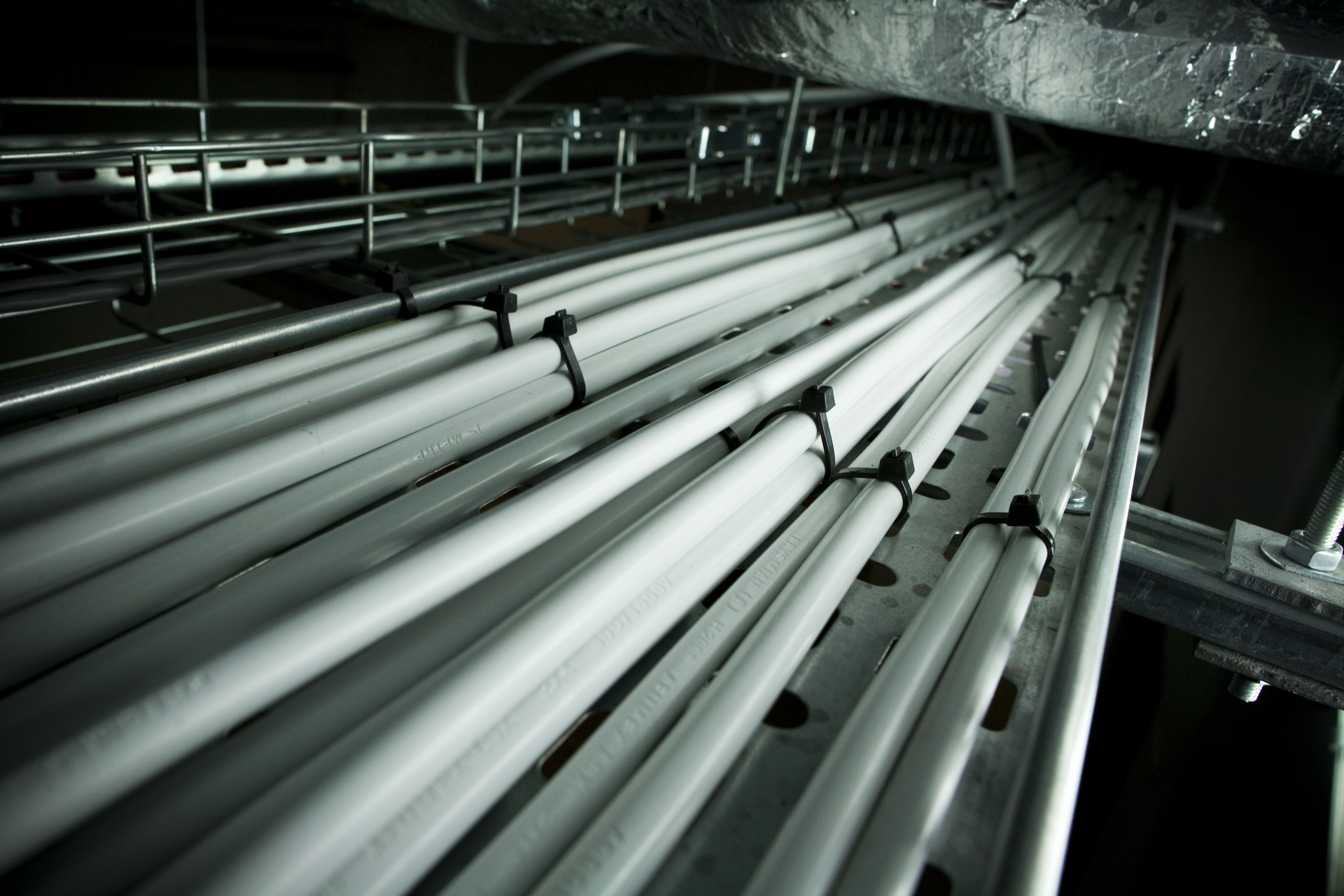
The benefits of screened cable
Electrical wiring systems are becoming increasingly complex, particularly in HMOs (houses in multiple occupation), university halls of residence, and offices. In these environments, screened cables such as Prysmian LSX protect the signals, data, or energy they carry from stray electromagnetic interference from other cables or devices. It also protects the nearby devices and cables from electromagnetic interference by the electrical current in the cable.
Why are screened cables important?
Screened cables are ideal in new builds and retrofitting projects for several reasons:
Easy to terminate and strip – Prysmian LSX is designed for practical installation with minimal effort, even in modular construction where the wiring can be installed into the units at a factory and then taken on-site. This reduces installation time and increases reliability as the testing is done in factory conditions rather than on site.
Retrofit-friendly – when installing extra wiring to racks and trucking that is already populated, cable space is often limited. Prysmian LSX can be pulled through existing partitions with minimal disruption. Additionally, the cable can be fitted directly onto the surface. Its white sheath provides a clean, professional installation in communal living areas.
Protection from electromagnetic interference (EMI) – the metallic screen isolates the cable from EMI, protecting the signal and making it independent from nearby circuits.
Construction and core options of LSX
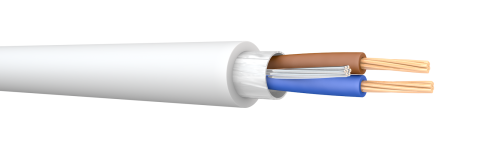
Screened cables feature stranded copper conductors in sizes 1.0 mm2, 1.5 mm2, 2.5 mm2 and 4.0 mm2, in up to four cores:
Two cores: brown, blue
Three cores: brown, black, grey
Four cores: blue, brown, black, grey
Screened cables have a XLPE insulation and a PVC sheath. While many armoured XLPE power cables are rated up to 90 °C, screened cables, such as Prysmian LSX, are typically rated at a maximum of 70 °C.
The difference is not because there are limitations of XLPE, but rather because of the intended use, i.e., armoured XLPE power cables are typically used for MV and HV power distribution, whereas screened cables are typically used in general wiring where voltages are much lower.
The inclusion of a metallic screen not only provides protection against EMI but also ensures fault protection and electrical safety and must be bonded to the outer sheath. This means that any fault current is conducted safely away, meeting the demands of BS 8436.
A spotlight on BS 8436
BS 8436 is the specification for 300/500 v screened electric cables having low emission of smoke and corrosive gases when affected by fire, for use in walls, partitions and building voids. The standard is “applicable to 2-core, 3-core and 4-core cables with an uninsulated, full-size circuit protective conductor and metallic screening.”
The standard also states that the cables should “have a screen that can carry the fault current required for a selected size and type of protective device that operates within a given time if the cable is penetrated by a nail or similar fixing.” In short, the screen must be robust enough to act like an earth conductor, carrying enough fault current to trip the protective device quickly if the cable is accidentally pierced.
Introduction of the nail penetration test
First published in 2004, BS 8436 was introduced to address safety concerns of installing cables in shallow, concealed walls and partitions, recommending a metal screen, LSOH-sheathed cable that could withstand some damage. The nail penetration test introduced in the standard ensures the safety and reliability of screened electric cables, particularly small power and lighting cables in these environments.
Incidents such as the tragic 1995 accident on the Isle of Wight helped highlight the need for improved protection. An exposed live cable in a public bathroom energised metal fittings and surfaces that were assumed to be safe, resulting in a fatality. Although it was not a direct result of a nail penetrating the cable, the story highlights the importance of robust cable protection.
The current standard BS 8436:2011, replaces the 2004 version and includes requirements for the construction, performance and testing of 2,3 and 4-core cables.
How does Prysmian LSX meet BS 8436?
Prysmian LSX is a screened indoor wiring cable for small power and lighting circuits, manufactured in accordance with BS 8436. Featuring plain copper conductors XLPE insulation, aluminium screen, a tinned copper uninsulated CPC and low smoke, zero halogen sheath, it provides robust safety benefits in the event of nail penetration or fire.
Previously called Afumex LSX or Earthshield LSX, the cable is ideally suited to installations in shallow voids thanks to its in-built aluminium electrical safety screen. This provides instant response if penetrated with a conductive metal object and coupled with Type B circuit breakers. The cable’s speedy termination and easy stripability also make it an ideal choice.
In addition, the 360° screen helps reduce the effects of radio and electromagnetic interference (RFI and EMI). Installing Prysmian LSX ensures sensitive wiring and equipment remains unaffected, it helps reduce electrical interference and helps meet electromagnetic compatibility regulations (EMC).
Backed by our technical expertise, Prysmian LSX offers a future-ready solution for modern wiring installations.