



A Complete Guide to Data Cabling Systems
With AI, cloud-computing and e-commerce driving rapid growth in the UK, ensuring the reliability of your digital infrastructure is crucial. This starts with the data cabling or structured cabling system underpinning your network. If you are specifying data cabling for an enterprise or data centre, this guide provides a clear overview of the key technologies, components, and considerations involved.
What is a data cabling system?
A data cabling system (often referred to as structured cabling) is the physical infrastructure that connects computers, Wi-Fi networks, phones and security devices within a building. Comprised of a range of cables, connectors and devices, structured cabling systems enable reliable communication and data transfer between computer servers, Wi-Fi access points and phone systems.
Types of data cabling
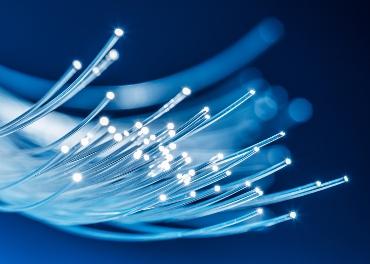
Data cabling installations are either copper or fibre, and can be classified into two types:
Twisted pair cables
Fibre optic cables
Twisted pair cables
As the name suggests, this type of cabling involves two individually insulated copper conductor conductors twisted around each other to prevent electromagnetic interference (EMI) and reduce crosstalk. This makes twisted pairs ideal for standard internet and data transmission (categorised as Cat 5e, Cat 6, Cat 6A and Cat 8, the higher the rating, the higher the speeds and higher the bandwidth over a given distance). They are also used in telecommunications and audio applications such as microphone lines.
Fibre optic cables
Data is transmitted as pulses of light through glass fibres, offering significantly greater bandwidth and reach than copper. There are two main types of fibre; single-mode and multi-mode:
Single-mode fibre allows light to travel in a single path and is smaller in diameter but offers higher performance over longer distances. There are lower internal reflections in single-mode fibre, resulting in faster signals and a reduced risk of signal loss.
Multi-mode fibre has a larger core diameter and allows multiple beams of light to bounce around at the same. As a result, multi-mode fibre experiences more internal reflections, meaning the signal is slower and can only travel short distances.
Key components of a data cabling system
A data cabling system also requires a range of components that organise, terminate and store the cable. These components play a vital part in supporting the overall efficiency and performance of the network.
Patch panels
Patch panels play a crucial role in managing and distributing fibre connections with cabinets and racks. They provide a centralised point, which allow all the cables to be laid out and organised, ensuring reliable and efficient high density optical connectivity.
Racks and cabinets
Although they are sometimes considered to be the same thing, the main difference is that racks are open-framed units with fixed rails, whilst cabinets are fully enclosed with side panels and doors. Both racks and cabinets are used to house and organise cables, IT and networking equipment.
Cable management systems
Components and accessories such as trays, containment, and raceways, keeps cables organised, accessible, and properly supported.
The components you specify, depends on the application, environment and space required.
Structured cabling: what is it and why does it matter?
Structured cabling is a standardised approach to designing a data cabling system in line with standards such as ISO/IEC 11801 and BS EN 50173. Instead of running individual cables point-to-point between devices, structured cabling organises the infrastructure into:
Horizontal cabling
Backbone cabling
Equipment rooms
Telecommunication enclosures
A well-designed structured cabling system allows active equipment to be changed or upgraded without reworking the underlying cabling infrastructure. It is also scalable and easier to manage and maintain over time.
Data centre cabling considerations

Data centres bring about their own unique set of challenges, most notably around cable density. Data centres have the capacity to house thousands of fibres and connections in a limited space, which means cable routing requires careful planning.
Scalability is also critical. With demands for AI tools accelerating, data centre cabling infrastructure needs to accommodate this rapid growth without replacing current cabling systems or components.
Additionally, power cables should always be separated from data cables to avoid EMI and maintain safety standards. Making use of overhead cable trays, for example, helps simplify installation and ongoing management.
Choosing the right data cabling system
Cabling structured for data centres should consider the following:
Speed requirements: not just what’s required now, but also what’s needed in 10 years’ time
Distance: copper cables reliably carry a data signal for up to 100 metres for horizontal runs before the signal starts to degrade and performance dips. Fibre can carry signals at greater distances without any losses.
Environment: indoor, outdoor and industrial environments all have different cable construction requirements, including fire performance ratings and low smoke zero halogen (LSOH) specifications.
Future-proofing your data cabling system is also worth considering, especially in terms of total cost of ownership. Initially specifying a higher category of cable than is currently needed can be more cost-effective than reconfiguring the infrastructure when it becomes inadequate.
Prysmian data cabling solutions
Prysmian delivers premium end-to-end solutions for data centres and telecommunications, ensuring a reliable, high-performance, future-proofed network. The Prysmian UC Connect range provides a comprehensive structured cabling solution, combining fibre optic and copper cable with the connectivity products needed for a complete installation. For data centre applications, Prysmian supplies an integrated solution encompassing both power and communications infrastructure, including ducting, panels, and components.
Learn more about Prysmian’s data centre offering.