


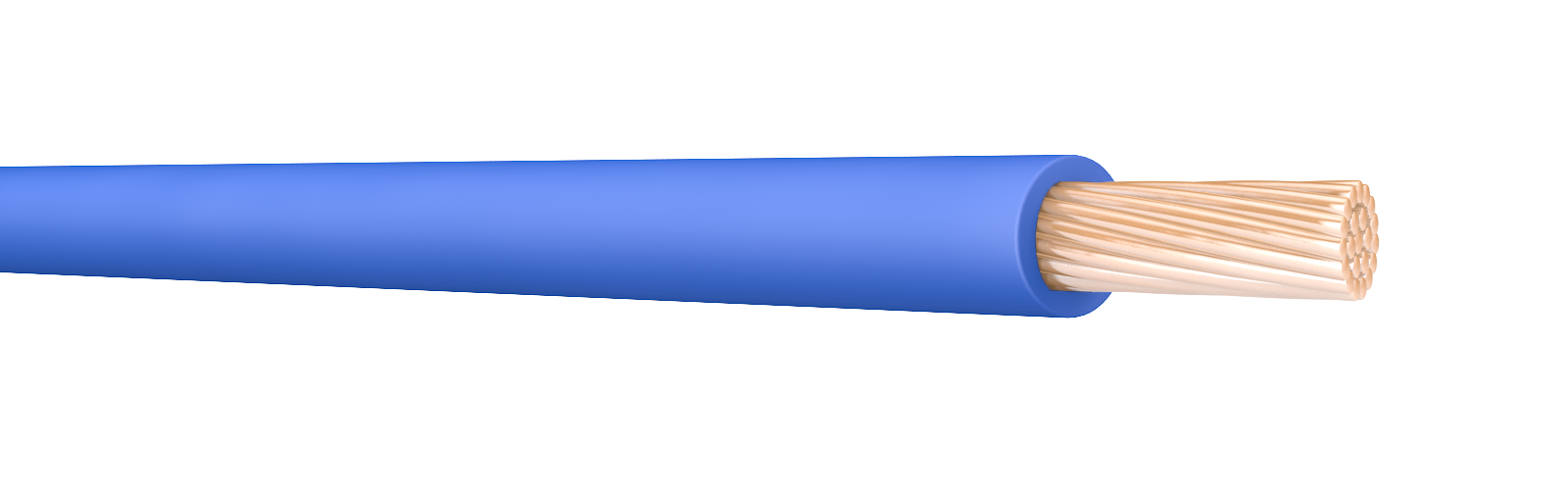
Understanding the 70°C/90°C rating on low smoke single core cables
You may have come across the dual 70°C/ 90°C temperature rating on a low smoke single cable, known formally as 6491B, and wondered if a 90°C rating means you can use a smaller cable size and still carry the same current?
The answer is a little complicated.
Although a low smoke single cable is designed to operate at higher temperatures than traditional PVC-insulated cables, the cable itself is only one part of the system. Understanding what the temperature ratings mean in practice, is essential in getting installations right first time.
What is 6491B?
6491B is a single-core, low voltage, low smoke zero halogen (LSOH) cable designed for use in fixed wiring installations. It is typically used for lighting and power circuits in public buildings such as hospitals, retail and entertainment, airports, rail stations – anywhere where low smoke zero halogen performance is required. The cable is also used in industrial panel wiring applications.
6491B meets the specifications as set out in BS EN 50525-3-41:2011, ‘Electric cables. Low voltage energy cables of rated voltages up to and including 450/750 V (U0/U) - Cables with special fire performance. Single core non-sheathed cables with halogen-free crosslinked insulation, and low emission of smoke.’
Cables manufactured to this specification standard should only be used for fixed wiring applications because they do not have a sheath to protect the electrical insulation. The cable should be installed within conduit, trunking or similar containment systems.
At Prysmian, these cables are manufactured in the UK at our specialist cable production facilities in Aberdare and Eastleigh, ensuring quality, consistency and compliance with industry standards.
What’s the difference between 6491B and 6491X?
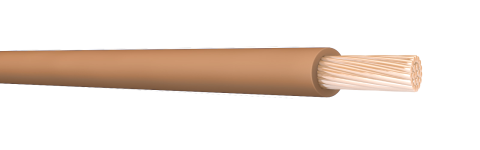
The main difference between 6491B and 6491X is the insulation. The copper conductor is identical in both cable types, and Prysmian continues to raise the bar by increasing the recycled pure copper content. 6491B uses a cross linked LSOH thermoset insulation, whereas 6491X uses a standard PVC thermoplastic insulation.
Thermoplastics soften and flow when heated, because the long polymer molecule chains move easily in amongst each other, which also allows them to be remelted and reshaped because their shape is not fixed. This makes thermoplastic cables easier to process, and they can be more flexible in service, but their performance is constrained at higher temperatures where softening and deformation can occur, significantly compromising the insulation.
Thermosets, by contrast, have similar carbon-based long polymer molecule chains but the chains are chemically bonded together, or cross linked so they can’t move around each other or flow or melt. They maintain mechanical and electrical integrity at higher temperatures, but they will char or degrade if exposed to excessive heat.
That means, when it comes to fire safety performance, 6491B is the preferred choice. Its LSOH insulation produces very little smoke and acid gas in the event of a fire, making it better suited to occupied buildings and public spaces than PVC-insulated alternatives such as 6491X.
Understanding the 70°C and 90°C ratings
The dual temperature rating of low smoke single cables can often be misunderstood. The temperature rating refers to the maximum operating temperature of the conductor under normal service conditions, not the ambient temperature surrounding the cable. In other words, a cable operating in a room at 25°C may still have a conductor temperature approaching its rated limit when carrying load current.
6491B features thermosetting insulation, so it can operate with a conductor temperature of up to 90°C under normal conditions. However, the cable is also recognised within installation standards using 70°C ratings for common applications.
This dual rating affects how current-carrying capacities are determined. When design assumptions permit operation at 90°C, the cable can achieve higher current ratings than would be possible using 70°C assumptions. These ratings are reflected in cable calculator tools, including CableApp, where conductor temperature assumptions feed directly into circuit current-carrying capacities.
Additionally, temperature ratings can influence short-circuit performance. A conductor permitted to operate at a higher maximum temperature can withstand different thermal stresses during fault conditions than a conductor with a lower maximum temperature. As a result, short-circuit ratings vary depending on whether 70°C or 90°C operating assumptions are applied.
Even though these differences can benefit certain design scenarios, they do not necessarily convert into opportunities to reduce cable size.
Considering the wiring system as a whole
A safe and reliable wiring system considers the performance of the system as a whole, not just the cable. Although 6491B is capable of operating at 90°C, terminals, accessories and other components in the electrical system are typically designed and tested for conductor temperatures of 70°C. That means that the overall system is determined by its lowest-rated component, not by the cable alone. This is something both Prysmian and the IET Wiring Regulations (BS 7671) recommend designers and installers consider carefully when making decisions about cable selection.
Installation considerations
Care should be taken to follow recommended installation practices, including appropriate cable pulling techniques, bend radii and containment design so that the cable can perform as intended.
Whilst the thermosetting insulation of 6491B provides excellent mechanical and thermal performance, it’s vital to take care when installing the cable especially on longer runs or where multiple bends are present. Any damage during installation can compromise long-term reliability.
The bottom line
The 70°C/90°C rating on 6491B cable is more complex than it appears. While the cable itself can operate at conductor temperatures up to 90°C, it’s important to understand how that rating interacts with the rest of the installation. Understanding the implications of temperature ratings, current-carrying capacities and equipment limitations, helps you to ensure installations remain safe, reliable and compliant.
For more information on 6491B, download the datasheet or use Prysmian Cable App to calculate the most appropriate cable selection for your project.